Partner Isabel Cooper-Oakley
Queer Places:
University of Cambridge, 4 Mill Ln, Cambridge CB2 1RZ
58 Cadogan Pl, London SW1X 9RS, UK
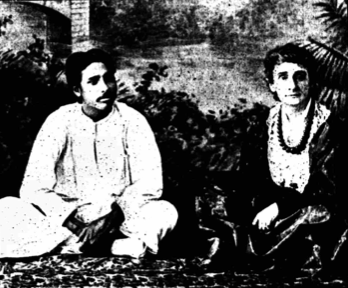 Frances Henrietta Müller (1846 – January 4, 1906) was one of late-Victorian Britain’s most uncompromising feminist campaigners, educational pioneers, and newspaper
proprietors. Recognized today as a foundational figure in British queer and lesbian history, her life was defined by active resistance to patriarchal norms—from refusing
to pay taxes without voting rights to living in same-sex households and championing singlehood as a liberating choice for women.
Frances Henrietta Müller (1846 – January 4, 1906) was one of late-Victorian Britain’s most uncompromising feminist campaigners, educational pioneers, and newspaper
proprietors. Recognized today as a foundational figure in British queer and lesbian history, her life was defined by active resistance to patriarchal norms—from refusing
to pay taxes without voting rights to living in same-sex households and championing singlehood as a liberating choice for women.
In April 2018, her historic impact was permanently commemorated in Parliament Square, London, with the unveiling of Gillian Wearing’s bronze statue of suffragist leader
Millicent Fawcett. The plinth features the names and etched portraits of 59 women and men who drove the women's
suffrage movement, honoring Henrietta Müller alongside her sister and fellow campaigner, Eva McLaren.
Born in Valparaíso, Chile, to a German merchant father and an English mother, Henrietta grew up in a wealthy household and spoke six languages. However, her fierce
independence was forged in opposition to her domineering father. She later wrote that her spirit of resistance stemmed from rebelling against his household tyranny,
risking her social reputation to gain "the priceless gift of humanity, the liberty to do what I believe to be right."
In 1873, she entered Girton College, Cambridge, where she studied Moral Sciences (philosophy, economics, and logic). Her time at Cambridge thrust her into the
burgeoning women's rights movement, leading her to help found the Women’s Printing Society and early female trade unions.
Müller was a pioneer in public office and direct action:
Encouraged by Millicent Fawcett, in 1879 Müller ran for the Lambeth division of the London School Board, topping the poll across all London boroughs with over 18,000
votes. On the board, she advocated for equal pay for female teachers and helped establish College Hall, the first residence hall for female university students in
London.
In July 1884, Müller made headlines by refusing to pay her taxes to protest women’s exclusion from the Franchise Bill. Bailiffs raided her home at 58 Cadogan Place,
hauling away a vanload of her furniture. Unfazed, Müller hosted 50 fellow feminist supporters in her emptied drawing room, declaring that "representation and taxation go
together." Her protest laid the tactical groundwork for the Women’s Tax Resistance League two decades later.
In October 1888, Müller launched The Women’s Penny Paper (later renamed The Woman's Signal), editing it under the pen name Helena B. Temple.
Boldly billed as "The Only Newspaper Conducted, Written, Published and Printed by Women," the weekly paper provided a platform for progressive debates on suffrage,
labor rights, and women’s autonomy.
Müller is regarded as a key figure in Victorian lesbian history due to her open rejection of heterosexual norms and her creation of women-centered domestic and economic
spaces:
In 1884, Müller published a landmark essay titled "On the Future of Single Women," dedicated to "All Happy Spinsters." She directly attacked the Victorian idea that a
woman’s ultimate goal was marriage, reframing singlehood as a state of freedom and intellectual vitality. She wrote that single women were free from the "tyranny of
marriage" and had no obligation to devote themselves to a single husband.
Müller openly shared households and business ventures with long-term female companions. Notably, she partnered with theosophist and entrepreneur
Isabel Cooper-Oakley, with whom she ran the Brook Street Exchange Rooms in 1889. She maintained dedicated domestic ties
with female partners throughout her adult life.
Müller frequently adopted non-conforming gender presentation, tailoring her wardrobe with masculine-styled coats and waistcoats. Within feminist and social circles, she
was affectionately referred to by masculine nicknames, including "Max" and "Matthew."
In the early 1890s, Müller turned her focus toward Theosophy. She traveled to India in 1892 as a lecturer and met Swami Vivekananda at the 1893 Parliament of the
World's Religions in Chicago, later editing several of his books. In 1895, she adopted a young Bengali son.
After living in China and the United States, she passed away in Washington, D.C., on January 4, 1906. Her estate was left to her sister, Eva McLaren, who carried on
their shared legacy of feminist activism.
References:
Other references:
- Müller, Henrietta [published anonymously]. "The Future of Single Women." Westminster Review, vol. 121 (January 1884): 151–162.
- Temple, Helena B. [pseud. for Henrietta Müller], ed. The Women’s Penny Paper (1888–1890) / The Women’s Herald (1890–1893).
- Müller, Henrietta. "A Lady’s Lecturing Tour in Southern India." The Theosophist, vol. 13, no. 6 (March 1892).
- The Women's Printing Society Records (1876–1900s). Held at the LSE Library (The Women's Library), London.
- Levine, Philippa. "Müller, (Frances) Henrietta (1846–1906)." Oxford Dictionary of National Biography (ODNB), Oxford University Press.
- The Women's Library @ LSE (London School of Economics).
- Gillian Wearing / Mayor of London Commission Archives (2018). Millicent Fawcett Statue & Plinth Monument, Parliament Square, London.
- Grosskurth, Phyllis. John Addington Symonds: A Biography. Longmans, 1964.
- Rubinstein, David. Before the Suffragettes: Women's Emancipation and English Society 1890–1914. Brighton: Harvester Press, 1986.
- Myall, Michelle. "No Taxation Without Representation": Women's Tax Resistance and the British Women's Suffrage Movement. Women's History Review, 1998.
Support this project
This website is a passion project researched, developed, and funded entirely by me. If you find the content valuable and would like to help support the ongoing research and hosting costs, any contribution is deeply appreciated.
Thank you for keeping this independent resource alive!
My books on Amazon: Elisa Rolle's books
BACK TO HOME PAGE
